
- Home
- Blog Details
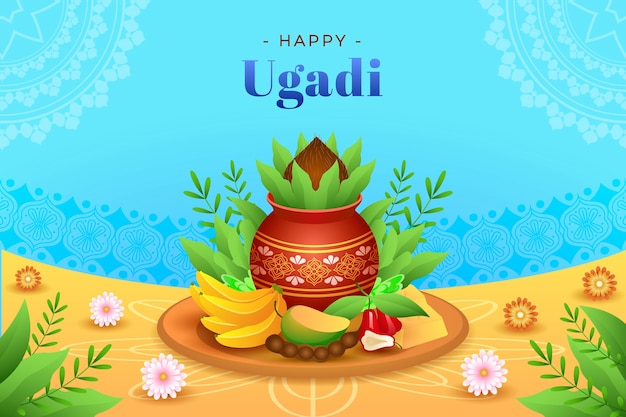
Ugadi, also known as Yugadi, is the New Year's Day for people of Andhra Pradesh, Telangana, Karnataka, and Maharashtra (as Gudi Padwa). The festival signifies new beginnings, prosperity, and spiritual growth. Celebrated on the first day of Chaitra month in the Hindu lunisolar calendar, Ugadi typically falls in March or April and marks the onset of spring.
Ugadi is a festival that symbolizes hope, renewal, and joy. The word "Ugadi" is derived from "Yuga" (age) and "Adi" (beginning), meaning the start of a new era. This festival also marks the beginning of a new Samvatsara (Hindu calendar year), which is believed to influence fortunes for the coming year.
In Hindu mythology, Ugadi is associated with Lord Brahma, who is said to have created the universe on this day. Many astrologers and scholars prepare the Panchanga (Hindu almanac), which provides astrological predictions for the year.
Ugadi celebrations begin days in advance, with houses being cleaned and decorated. People buy new clothes, prepare special delicacies, and visit temples to seek blessings for a prosperous year ahead.
House Cleaning & Decoration – It is believed that cleanliness attracts positive energy and good fortune. Doorways are adorned with mango leaves (toranas) and rangolis are drawn to invite prosperity.
Oil Bath & New Clothes – The day begins with an oil bath, which symbolizes purification. Families then wear new traditional attire.
Temple Visits – Devotees visit temples to pray for a blessed year.
Panchanga Shravanam – Priests and scholars read out the Panchanga (Hindu calendar predictions), foretelling the year’s events.
One of the most significant traditions of Ugadi is preparing and consuming Ugadi Pachadi, a unique dish made of six ingredients that represent the different experiences of life:
Neem (Bitter) – Challenges and sorrow
Jaggery (Sweet) – Happiness and success
Raw Mango (Tangy) – Surprises and excitement
Tamarind (Sour) – Disappointments
Salt (Salty) – Interests in life
Chili (Spicy) – Anger and passion
This special dish is a philosophical reminder that life is a mix of different emotions and experiences, and one must embrace them all.
Though Ugadi is mainly celebrated in Andhra Pradesh, Telangana, and Karnataka, similar New Year festivals are observed in different parts of India:
Gudi Padwa – Maharashtra
Baisakhi – Punjab
Puthandu – Tamil Nadu
Vishu – Kerala
Bihu – Assam
Each region adds its own unique traditions and customs, making the celebrations diverse yet unified in spirit.
Food plays a crucial role in Ugadi celebrations. Families prepare an elaborate feast, including:
Ugadi Pachadi – A traditional mixture symbolizing life’s experiences.
Bobbatlu / Obbattu / Puran Poli – A sweet flatbread stuffed with jaggery and lentils.
Pulihora (Tamarind Rice) – A tangy and flavorful dish.
Payasam / Kheer – A sweet dish made of milk, rice, or vermicelli.
The feast represents abundance, prosperity, and the joy of togetherness.
Ugadi marks the beginning of the Chaitra month in the Hindu lunisolar calendar, and astrologers predict the future of individuals and nations based on the planetary positions. The Panchanga (almanac) reading is an integral part of the festival, offering insights into the economic, social, and climatic conditions for the coming year.
While traditional celebrations remain strong, modern Ugadi festivities have evolved:
Social Media Celebrations – People share greetings, wishes, and images online.
Community Gatherings – Many housing societies and cultural organizations organize cultural events, dance performances, and poetry recitals.
Corporate Celebrations – Many companies acknowledge Ugadi by sending greetings and organizing special events for employees.
Eco-Friendly Ugadi – People now focus on sustainable decorations, organic food, and reducing plastic waste in their celebrations.
Ugadi’s essence of new beginnings and embracing change holds great relevance in today’s world:
It teaches us to welcome both joy and challenges with resilience.
The tradition of Panchanga reading reminds us to plan ahead and make informed decisions.
The importance of family, community, and gratitude is emphasized.
In an era of stress and uncertainty, festivals like Ugadi bring joy, hope, and a sense of cultural identity.
Ugadi is not just a New Year’s festival, but a celebration of life, culture, and spiritual renewal. It brings together tradition, festivity, and wisdom, reminding us that every new beginning comes with its own blend of experiences. As we step into another year, let us embrace positivity, cherish our roots, and look forward to new opportunities.
Wishing everyone a Happy and Prosperous Ugadi!


